Inherited
You stop paying for a house and get a fair price.
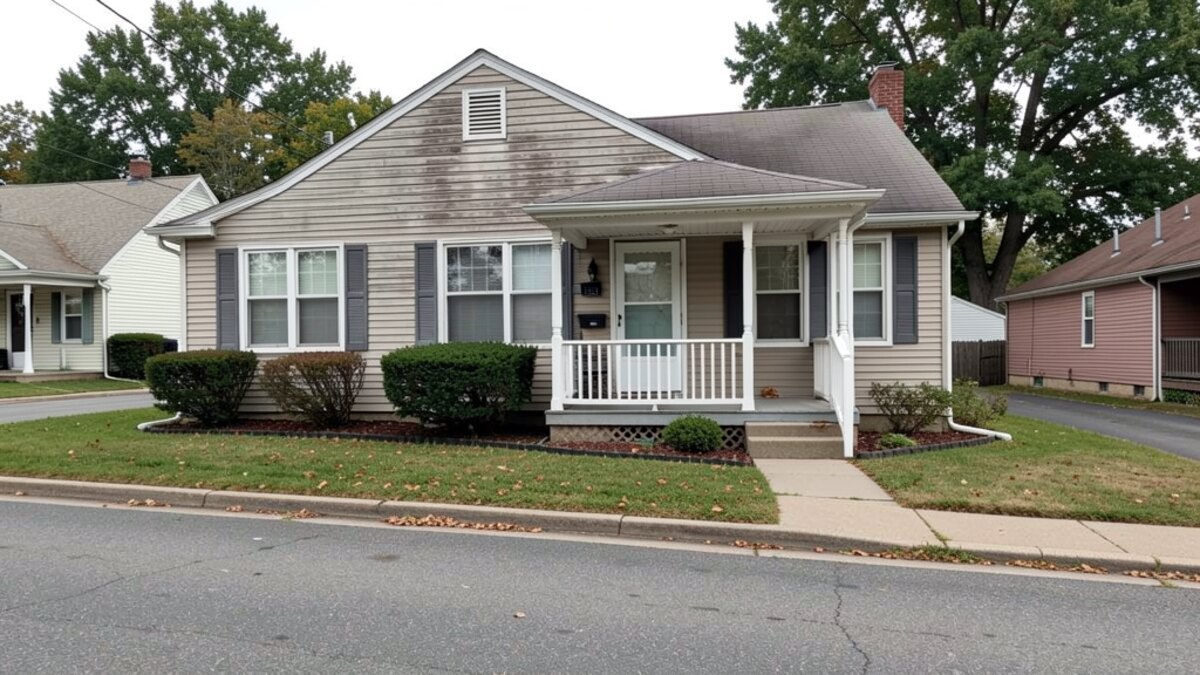
Findlay, Ohio · Hancock County
We buy houses as-is in Findlay and Hancock County, in any condition — no repairs, no cleaning, no cleanout required to sell to us.
You're going to get a fair price and not have to do anything. Just show up at settlement.
Call 888-274-5006 to talk about the property. Hablamos Español.
We'll give you a written cash offer within 24 hours.
Share the address and tell us about the house.
Hablamos Español
See what you'd actually walk away with. We started with Zillow's typical home value for Findlay, $244,994 as of August 2026 (Source: Zillow Home Value Index), and the local conveyance-fee rule under Ohio law: a $1-per-$1,000 state fee, with a county amount of up to $3 per $1,000. Pick your home's condition, from light touch-ups to fire damage, and change any number.
Findlay, OH illustrative estimate
The sale price is only the starting point. What matters is what you keep after your payoff, repairs, fees, and other costs come out. That's your net proceeds.
The home value starts with Zillow’s typical value for the area. Your house may be worth more or less. You can change the value and every cost below. Adjust anything you know, including your payoff, repair or credit risk, cleanout cost, agent commission, and how long you expect to carry the property.
Starting-value basis: Zillow typical home value for Findlay, OH (As of August 2026): $244,994. Editable estimate, not an appraisal. Source: Zillow Home Value Index
See what you'd actually walk away with.
Your starting home-value estimate may come from a public source when one is available. You can edit that estimate and each cost input above; your property's actual value and closing costs may differ.
Choose the condition that best fits your home, then update the value, mortgage payoff, and cost inputs with what you know. The local-cost input is an editable cost reserve, not a verified local tax rate.
1
Share the address, what needs work and who lives there. Tell us when we can see it and when you want to sell.
2
We give written cash offers in 24 hours.
3
Written offer and written terms before you commit; title-company closing.
Choose the situation closest to yours to see what a direct sale in Findlay can look like.
You stop paying for a house and get a fair price.
Our agreement of sale will often get a sheriff's sale postponed so we can close. Signing alone doesn't postpone it automatically; we use the agreement to ask for the postponement, and it works more often than people think.
You keep the insurance money and don't have to worry about the house anymore — we'll take care of it.
When you sell to us, we can set it up so you don't have to prepay anything — it comes out at closing.
You're done — no turnover, no repairs, no more bad tenants.
The fines don't stop while you think about it. They pile up, they add new ones, and every month takes another bite out of what the property is worth to you. We can buy it quickly, violations and all, so you stop the bleeding and keep your equity.
You only have to agree on one thing — the price. After that we handle the rest, so there's nothing to argue about over repairs, contractors, showings, or who pays for what.
We buy fire-damaged houses exactly as they stand — no cleanup, no repairs, no hauling debris — and you keep your insurance proceeds. Confirm how the proceeds and any mortgage requirements apply to your claim with your insurer and mortgage servicer.
We have two ways to buy. A Cash Offer is built for speed, condition, and tough situations — heavy repairs, tight timelines, difficult circumstances. EZ Sale is often the better fit when the house doesn't need major repairs and you want a higher number. Either way, you compare written numbers and you pick what works best for you.
Swipe across the table to compare all four selling options.
| Factor | List with a realtor | FSBO | Cash Offer | EZ Sale |
|---|---|---|---|---|
| Timeline | Market-dependent | Market-dependent | 30 days or less | 60 days or less |
| Price | Highest, if it sells | Varies | Lower price | Higher price than the Cash Offer |
| Repairs | Repairs may be needed before listing or after inspection | The seller handles repair decisions | No repairs | No repairs |
| Commissions | Agent commissions apply under the listing agreement | No listing-agent commission; the seller handles the sale | No commissions | No commissions |
| Closing costs | Seller costs depend on the contract and settlement statement | Seller costs depend on the contract and settlement statement | No closing costs | No closing costs |
| Showings | The seller prepares for and coordinates showings | The seller markets the property and coordinates showings | None | None |
| Who buys | Retail buyer | Retail buyer | USA Home Buyers buys directly | Goes to one of our partners |
| Certainty | Depends on the buyer, inspections, financing, and contract | Depends on finding and qualifying a buyer | Written offer and written terms before you commit; title-company closing. | Written offer and written terms before you commit; title-company closing. |
| Net proceeds | Compare the expected sale price after commissions, repairs, costs, and waiting | Compare the expected sale price after seller-managed costs and work | Compare the written price after your payoff and other property obligations. No commissions. No closing costs. | Compare the written price after your payoff and other property obligations. No commissions. No closing costs. |
Compare what you would keep after costs with the Findlay, OH calculator →
Questions about the two options? Call 888-274-5006.
Prices, timing and your selling options
Homes in Findlay, OH sold for a median of $220,000 for the three months ending August 2026 (Redfin). Repairs and condition affect what someone will pay for your house. Homes in Findlay, OH spent a median of 42 days on the market for the three months ending August 2026 (Redfin). You still have bills while waiting to sell, including utilities and any mortgage payments. Allow time for closing, too.
Ohio charges a conveyance fee when a house sells. State law sets a required $1 per $1,000, and a county may add up to $3 per $1,000. The title company confirms the amount that applies to a particular Findlay property. When you sell to us, we pay it.
For example, the state portion on a $100,000 sale is $100; any county amount is additional. Mortgage payoffs, title and recording charges, prorations, and other settlement items depend on the property and written terms; review the actual figures with the title company.
Sources: Hancock County Auditor property-transfer information · Ohio Revised Code § 319.54 · Ohio Revised Code § 322.02.
Findlay has homes across every construction-era band reported in the 2024 American Community Survey five-year data, from 1939 or earlier through 2020 or later. The same data estimate 10,769 owner-occupied and 7,217 renter-occupied units. Those citywide figures do not tell you the condition or occupancy of one house.
For your own comparison, write down the repairs you already know about, whether anyone lives in the house, and what access is practical. Those details help us review the property as it stands and help you compare that option with the preparation, showings, and costs of a listing.
Source: Findlay housing and occupancy tables, 2024 ACS five-year estimates (Census Reporter).
Testimonials are real, from our transactions, verified and approved by our attorneys. Each seller's actual town appears with the review.
Our founder bought his first property in 2004 — more than 20 years of buying houses. Findlay is a market we serve.
We've helped homeowners in just about every situation you can imagine — thousands of times. When you're working with someone, you want to know they've seen it before. We have.
Property and tax records, including the county’s real-estate transfer information.
Recorded deeds and other county land records.
Probate court information for estate-related questions.
Official city information and municipal services.
Yes. We buy houses as-is in Findlay and Hancock County, in any condition — no repairs, no cleaning, no cleanout required to sell to us.
We give written cash offers in 24 hours. You receive the written offer and written terms before you commit, and the closing is through a title company.
Ohio law sets a state conveyance fee of $1 per $1,000 and allows a county to add up to $3 per $1,000. Confirm the amount that applies to a Hancock County property with the County Auditor or title company. When you sell to us, we pay the conveyance fee.
Our agreement of sale will often get a sheriff's sale postponed so we can close. Signing alone doesn't postpone it automatically; we use the agreement to ask for the postponement, and it works more often than people think.
We buy fire-damaged houses exactly as they stand — no cleanup, no repairs, no hauling debris — and you keep your insurance proceeds. Confirm how the proceeds and any mortgage requirements apply to your claim with your insurer and mortgage servicer.
Tell us what is happening with the property. We buy houses as-is in Findlay and Hancock County, and you can compare written terms before you decide.
Call 888-274-5006
Hablamos Español
We'll give you a written cash offer within 24 hours.
Share the address and tell us about the house.
Hablamos Español
Findlay's visitor bureau lists Downtown Findlay, Fostoria, McComb, and Arlington among local places and nearby communities.
Downtown Findlay · Fostoria, McComb, and Arlington · Nearby Ohio market pages: Lima and Tiffin.