
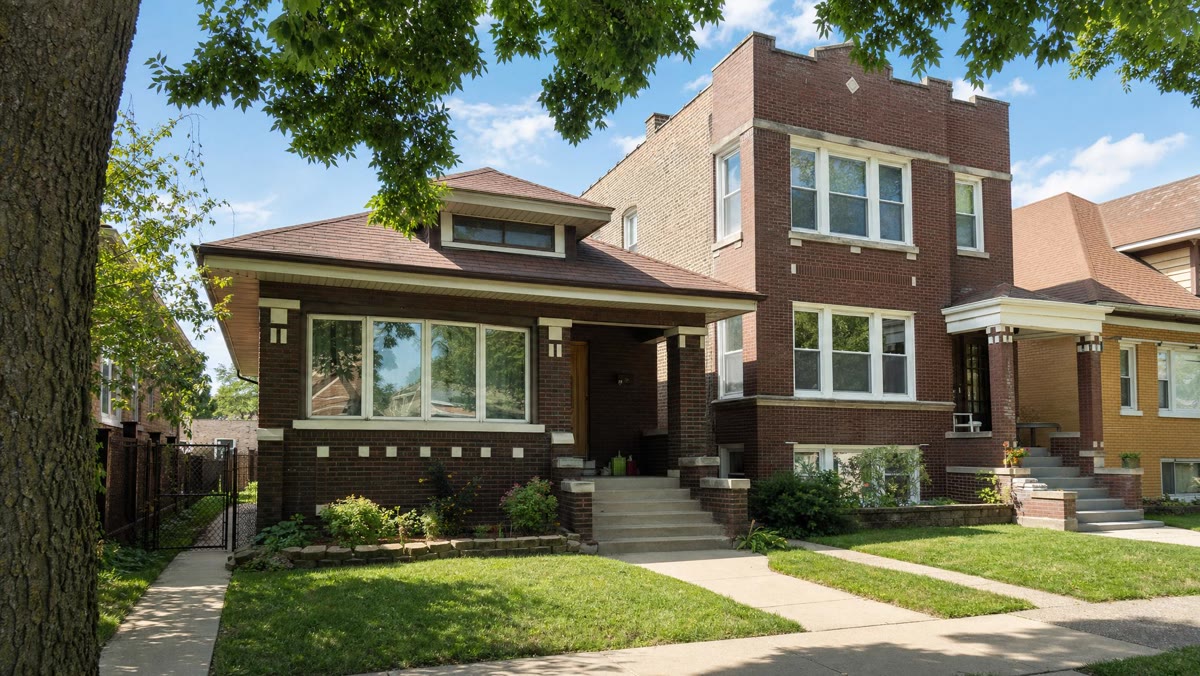
Chicago, Illinois · How the process works
How Selling Your Chicago House to Us Works
We buy houses as-is in Chicago and Cook County, Illinois. Chicago addresses can also be in DuPage County, so the full address matters when checking county records. We buy houses as-is, in any condition — no repairs, no cleaning, no cleanout required to sell to us.
You can start the conversation before every property question is settled. Call 888-274-5006 or tell us what you know about the house.
Tell us about the houseStart with what you know
Tell us what is going on with the house
The address, condition, occupancy, access, and timing give us a starting point. If an estate, tenant, notice, payoff, lien, tax balance, or move deadline is part of the situation, tell us what you know. You can begin before every detail is clear.
Call 888-274-5006 if you would rather talk first.
We'll give you a written cash offer within 24 hours.
We give written cash offers in 24 hours.
Share the address, condition, occupancy, access, and timing you know.
From the first conversation to settlement
The sale, step by step
Tell us about the house
Start with the property address, its condition, who lives there, access, and the timing you have in mind. You do not need every answer before the first conversation. Chicago addresses can be in Cook or DuPage County, so the full address also helps identify the right county records.
Talk through the property and get a written offer
We ask about the house as it stands and the situation around it. We buy houses as-is, in any condition — no repairs, no cleaning, no cleanout required to sell to us. We'll give you a written cash offer within 24 hours.
Read the written terms before deciding
Written offer and written terms before you commit; title-company closing. Read the price, responsibilities, possession, timing, costs, and any property-specific conditions. Ask questions before you decide whether to proceed, compare another option, or stop before signing.
Let the title company check the records and payoffs
The title company checks the deed, who can sign, mortgage payoffs, liens, taxes, and the documents needed for closing. A payoff is the amount needed to satisfy a mortgage or other obligation. A lien is a recorded claim for money against the property. If an estate, court matter, or other authority question is involved, the documents and property address help identify what needs to be resolved before settlement.
Review the settlement sheet and close
The settlement sheet shows how the sale money breaks down. We always review the settlement sheet with the seller and walk through how the money breaks down so there is no confusion. We try to do that the day before closing so settlement is smooth; the title company confirms the final numbers. You're going to get a fair price and not have to do anything. Just show up at settlement.
Cash Offer or EZ Sale: compare the written numbers
We have two ways to buy. A Cash Offer is built for speed, condition, and tough situations — heavy repairs, tight timelines, difficult circumstances. EZ Sale is often the better fit when the house doesn't need major repairs and you want a higher number. Either way, you compare written numbers and you pick what works best for you.
Swipe across the table to compare all four selling options.
| Factor | List with a realtor | FSBO | Cash Offer | EZ Sale |
|---|---|---|---|---|
| Timeline | Market-dependent | Market-dependent | 30 days or less | 60 days or less |
| Price | Highest, if it sells | Varies | Lower price | Higher price than the Cash Offer |
| Repairs | Repairs may be needed before listing or after inspection | The seller handles repair decisions | No repairs | No repairs |
| Commissions | Agent commissions apply under the listing agreement | No listing-agent commission; the seller handles the sale | No commissions | No commissions |
| Closing costs | Seller costs depend on the contract and settlement statement | Seller costs depend on the contract and settlement statement | No closing costs | No closing costs |
| Showings | The seller prepares for and coordinates showings | The seller markets the property and coordinates showings | None | None |
| Who buys | Retail buyer | Retail buyer | USA Home Buyers buys directly | Goes to one of our partners |
| Certainty | Depends on the buyer, inspections, financing, and contract | Depends on finding and qualifying a buyer | Written offer and written terms before you commit; title-company closing. | Written offer and written terms before you commit; title-company closing. |
| Net proceeds | Compare the expected sale price after commissions, repairs, costs, and waiting | Compare the expected sale price after seller-managed costs and work | Compare the written price after your payoff and other property obligations. No commissions. No closing costs. | Compare the written price after your payoff and other property obligations. No commissions. No closing costs. |
Compare what you would keep after costs with the Chicago calculator →
Questions about the two options? Call 888-274-5006.
Chicago and Illinois details
The property address matters for transfer taxes
Chicago addresses can be in Cook or DuPage County. For a taxable transfer, Illinois charges 50 cents for each $500 of taxable value, or part of $500. A county can add 25 cents for each $500, and cities can impose their own transfer taxes. The state tax alone is $100 on $100,000 of taxable value; with the county tax at that rate, it is $150 before any city tax. The property's taxable value, exemptions, actual county, and city affect which tax lines apply and the final amount.
Closing numbers
See what is paid and what you keep at settlement
The settlement sheet puts the sale price beside the amounts applied or paid at closing, such as mortgage payoffs, liens, taxes, and closing costs. The amount scheduled for you is the sale proceeds after those applicable lines are accounted for; it is not necessarily the sale price.
When you sell to us, we pay the closing costs, including the Illinois state, county and city transfer taxes.
That closing-cost payment does not pay your mortgage balance, liens, back taxes, or your share of current property taxes. Those are separate settlement items when they apply.
Compare your own price, payoff, repair, cleanout, and cost assumptions with the Chicago home-sale net-proceeds calculator.
When something changes
We keep working through the bumps
It's real estate. Sometimes there are bumps in the road. We won't disappear when that happens, and we'll be fighting to get this to the closing table.
If your sale involves an estate, a scheduled foreclosure, a divorce, a tenant, a code notice, fire damage, or a lien, these Chicago pages cover those situations:
- Inherited property
- Foreclosure
- Divorce and a house sale
- Tenant-occupied property
- Code violations
- Fire damage
- Property liens and back taxes
You can also read Chicago seller reviews.
Questions about selling a Chicago house
Can I start before every property question is settled?
Yes. Start with the full address and what you know about the house, its condition, occupancy, access, and timing. You can bring up unanswered questions as we talk through the property.
Do I have to repair, clean, or empty the house first?
We buy houses as-is, in any condition — no repairs, no cleaning, no cleanout required to sell to us.
What happens before I decide to sell?
We'll give you a written cash offer within 24 hours. Written offer and written terms before you commit; title-company closing.
Which transfer taxes do you pay?
When you sell to us, we pay the closing costs, including the Illinois state, county and city transfer taxes. Your mortgage balance, liens, back taxes, and share of current property taxes are separate.
What does the settlement sheet show?
It shows the sale price and settlement lines such as mortgage payoffs, liens, taxes, closing costs, and the amount scheduled for disbursement. A payoff is the amount needed to satisfy a mortgage or other obligation; a lien is a recorded claim for money against the property.
Questions or ready to talk?
Call 888-274-5006 or use the form above to start with the property address and what you know. You can compare the written terms with other options before deciding.